

Beyond the Salt Shaker: Four Quieter Habits Linked to Healthy Blood Pressure
Cutting back on salt gets most of the attention. Federal guidelines and a large 2023 research review point to a few other everyday habits, plus one conversation worth having with your doctor.
Ask people what they do for their blood pressure and most of them mention salt. That makes sense, because sodium is the habit everyone has heard of. But the 2017 blood pressure guideline from the American College of Cardiology and the American Heart Association lists several other non-drug approaches next to it, including more potassium from food, regular physical activity that includes resistance training, and moderating alcohol.
None of these replace care from your doctor or any medicine you take. They are everyday habits, and this guide covers what public guidance actually says about each one. Tempo, our resident tortoise, will keep the pace.
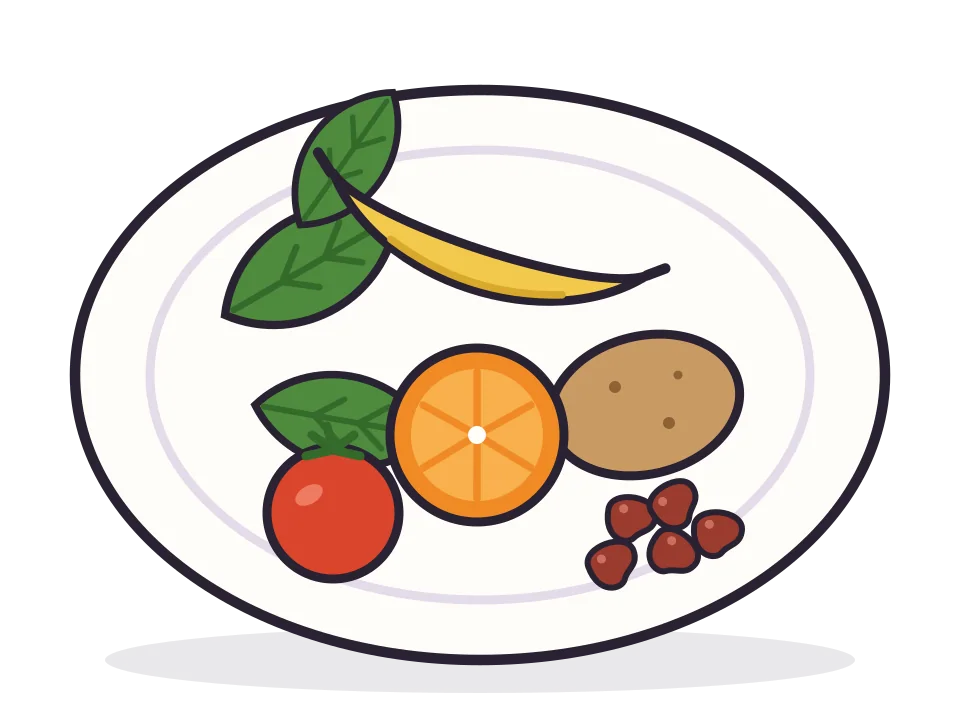
Fill the plate with potassium
Potassium is a mineral found in many fruits, vegetables, beans and dairy foods. The Dietary Guidelines for Americans 2020-2025 list it among the nutrients that many Americans do not get enough of. The American Heart Association explains that potassium helps the body handle sodium and helps ease tension in blood vessel walls.
Source: National Academies of Sciences, Engineering, and Medicine, 2019.
Food is the usual route. A few familiar sources:
- Beans and lentils
- Potatoes with the skin
- Bananas
- Oranges
- Tomatoes
- Spinach
- Plain yogurt
- Milk
- Dried apricots
- Avocado
Check first. More potassium is not right for everyone. If you have kidney problems or take medicines that affect potassium, ask your doctor before adding a lot of it to your diet, and talk to them before trying any potassium supplement.
Count the drinks
The Dietary Guidelines for Americans give a clear daily limit for adults who choose to drink, and the 2017 ACC/AHA guideline names alcohol as something to moderate for blood pressure.
Drinking less is better for health than drinking more.
Dietary Guidelines for Americans, 2020-2025
One drink means about 14 grams of pure alcohol. In everyday terms:
- 12 ounces
- of regular beer, about 5 percent alcohol
- 5 ounces
- of wine, about 12 percent alcohol
- 1.5 ounces
- of distilled spirits, about 40 percent alcohol
Not drinking is always an option, and some people should not drink at all, including anyone who is pregnant and people who take certain medicines. Your doctor can tell you what makes sense for you.
Break up long sitting
The Physical Activity Guidelines for Americans open their advice for adults with two plain sentences:
Adults should move more and sit less throughout the day. Some physical activity is better than none.
Physical Activity Guidelines for Americans, 2nd edition, 2018
That does not require a gym. It can be as simple as getting up and moving for a few minutes several times a day. On an ordinary day it might look like this:
Walk around the kitchen while the coffee brews.
Refill your water glass and take the long way back.
Take a ten-minute walk after lunch.
Take a phone call on your feet.
Fold laundry or tidy up during a commercial break.
Across a week, the guidelines suggest building toward at least 150 minutes of moderate activity, such as brisk walking, in whatever chunks fit your schedule.
Give your muscles some work
The same federal guidelines ask adults to do muscle-strengthening activities that involve all major muscle groups on 2 or more days a week. Strength work and blood pressure have also been studied directly.
What a large 2023 review found
Researchers writing in the British Journal of Sports Medicine pooled 270 randomized controlled trials on exercise and resting blood pressure. Every type of exercise they looked at was linked with lower readings on average.
Isometric exercise, where you hold a position such as a wall sit or a firm handgrip, showed the largest average change.
Everyday ways to give your muscles some work:
- Carrying groceries in from the car
- Climbing a few flights of stairs
- Standing up from a chair and sitting back down, ten times
- Push-ups against a wall
- Gardening that involves digging or lifting
- Resistance bands while you watch TV
Breathe through it. Breathe steadily during any hold or lift instead of holding your breath. If your blood pressure is high or not yet under control, or you have a heart condition, ask your doctor which exercises are safe for you before you begin.
Bring better questions to your checkup
Every habit in this guide works best as part of a plan you make with your doctor or nurse. A few written questions can make a short visit more useful. Tempo keeps a list on a clipboard; yours can live in a notes app.
- What were my numbers today, and what range should I aim for?
- How often should I check my blood pressure between visits?
- Is eating more potassium-rich food a good fit for my kidneys and my medicines?
- How much alcohol, if any, is reasonable for me?
- Which kinds of exercise are safe for me to start, and how much?
Keep taking any medicine the way your doctor directs, and ask before changing anything.
Call 911 if you have chest pain, shortness of breath, back pain, numbness or weakness, a change in vision or trouble speaking.
The short version
- PotassiumBeans, potatoes, fruit and yogurt, if your doctor agrees.
- AlcoholTwo drinks a day or less for men, one or less for women.
- SittingGet up for a few minutes, several times a day.
- StrengthTwo days a week, breathing steadily, with your doctor's OK.
References
- Whelton PK, Carey RM, Aronow WS, et al. 2017 ACC/AHA guideline on high blood pressure in adults. Hypertension. 2018;71(6):e13-e115.
- U.S. Department of Agriculture and U.S. Department of Health and Human Services. Dietary Guidelines for Americans, 2020-2025. 9th edition. December 2020.
- National Academies of Sciences, Engineering, and Medicine. Dietary Reference Intakes for Sodium and Potassium. The National Academies Press; 2019.
- American Heart Association. How Potassium Can Help Control High Blood Pressure. Patient education page.
- U.S. Department of Health and Human Services. Physical Activity Guidelines for Americans, 2nd edition. 2018.
- Edwards JJ, Deenmamode AHP, Griffiths M, et al. Exercise training and resting blood pressure: a large-scale pairwise and network meta-analysis of randomised controlled trials. British Journal of Sports Medicine. 2023;57(20):1317-1326.
- American Heart Association. Hypertensive Crisis: When You Should Call 911 for High Blood Pressure. Patient education page.